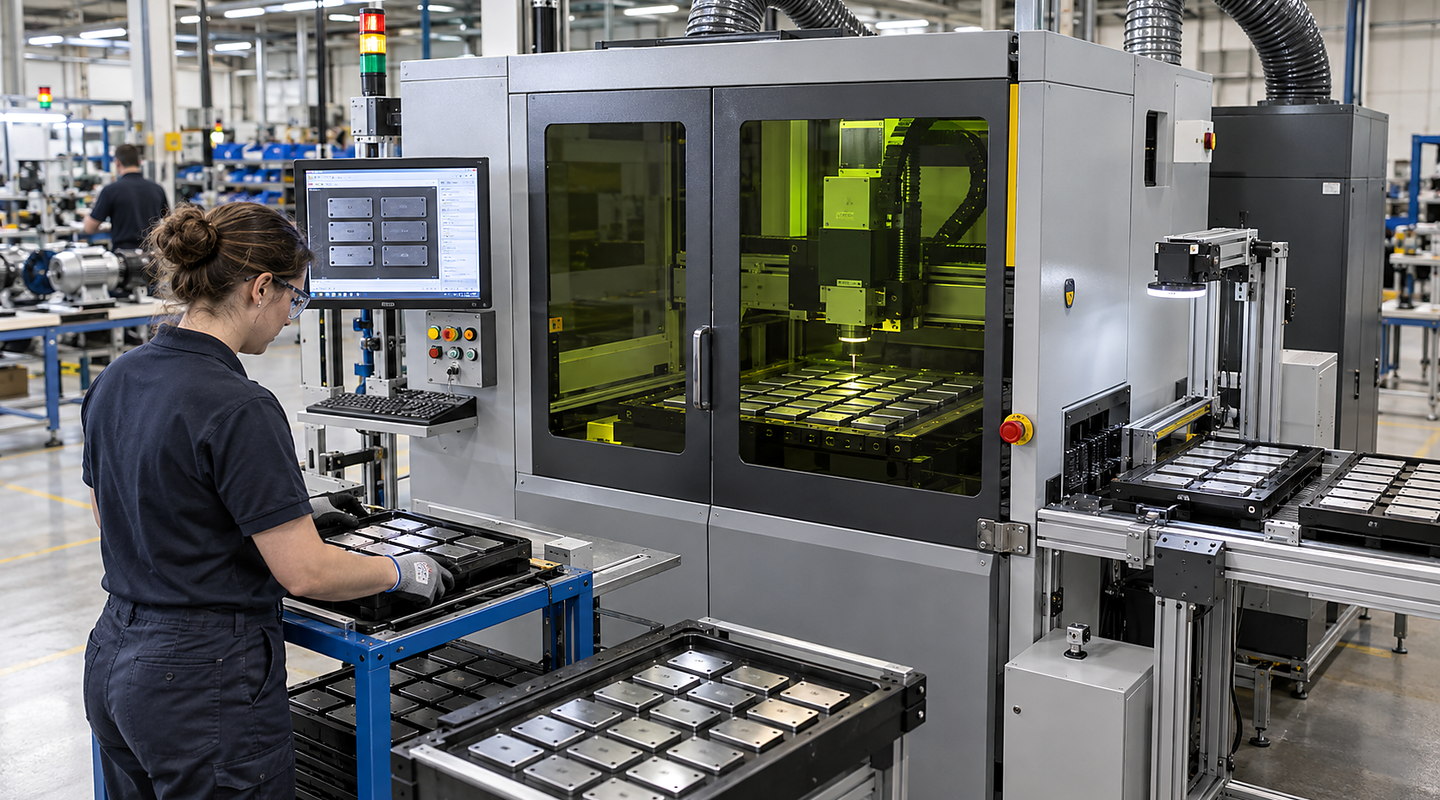
Cryogenic Label Printing: How the Process Works
Follow the operating sequence for cryogenic label printing, from preparing the input and controlling the main task to handling exceptions and checking results.
Cryogenic Label Printing should be considered as part of a complete production sequence: inputs are prepared, the main task is controlled, exceptions are handled and results are checked.
For your application, the important details include identifier and data rules for label printing for low-temperature storage, substrate, label or tag behaviour, production speed and read-point conditions, and line, business-system and network interfaces.
Understand the complete route from input to accepted output — Cryogenic Label Printing
Plan cryogenic label printing around your identifiers, substrates, production events, system interfaces, exceptions and verification records. Discuss a practical data-flow approach with Oxford Traceability. Follow the material or part through each operating step and include recovery, cleaning and change in the real cycle.
Discuss your application

Four clear stages for cryogenic label printing
At each stage, you can review how identifier and data rules for label printing for low-temperature storage and verification, retention and reconciliation evidence affect the next commitment.
- 01
Define Identifiers, Events and Authoritative Data Sources
Share real identifiers, substrates, production events and exception records, including the normal range for identifier and data rules for label printing for low-temperature storage and the difficult substrate, label or tag behaviour cases.
- 02
Trial the Mark, Label, Tag or Read Method
Compare suitable methods and use focused trials to show how each option performs against production speed and read-point conditions.
- 03
Integrate Devices, Controls and Production Data
Connect the equipment to your line, services and controls while resolving line, business-system and network interfaces for day-to-day operation.
- 04
Challenge Exceptions and Reconcile Agreed Records
Confirm exception, rework and duplicate handling, then complete and record verification, retention and reconciliation evidence before your operating team takes over.
Decisions and results stay connected
| Stage | What happens | What you can review |
|---|---|---|
| Define Identifiers, Events and Authoritative Data Sources | Confirm the requirements for label printing for low-temperature storage, the operating range and the definition of a good result. | Your samples, current information and any points that still need confirming. |
| Trial the Mark, Label, Tag or Read Method | Compare workable methods using identifier and data rules for label printing for low-temperature storage and substrate, label or tag behaviour from your real production. | The trial method, observations and reason for the recommended route. |
| Integrate Devices, Controls and Production Data | Resolve production speed and read-point conditions, line, business-system and network interfaces and the physical, control, safety and data connections. | The agreed layout, line connections and any changes from the proposal. |
| Challenge Exceptions and Reconcile Agreed Records | Check normal, difficult and fault conditions before your team takes over the system. | Results for exception, rework and duplicate handling and verification, retention and reconciliation evidence, plus actions and operating information. |
Keep connected responsibilities clear
Your final cryogenic label printing scope must also account for exception, rework and duplicate handling, verification, retention and reconciliation evidence, current regulations and the conditions at your site.
- Mark, label, tag and reader performance depends on the real substrate and environment.
- A readable code does not prove that its encoded data is correct or reconciled.
- Retention, privacy and regulatory rules must be defined by the responsible organisation.